KEY TAKEAWAYS
- Paint codes have factory variants, and your paint changes with age and sun.
- Fremont's dry, sunny summers age the roof, hood and trunk faster than the sides.
- Metallic, pearl and tri-coat colors are the hardest to match and need spray-out tests.
- Blending into the adjacent panel is what hides small color differences.
- A hard edge, cloudy metallic or different gloss are signs of a bad match.
Car paint often doesn't match after a repair because the shop mixed the color from the paint code alone, while your car's actual color has shifted with age and sun, and because the new paint wasn't blended into the neighboring panels. Metallic, pearl and tri-coat colors make it harder, since the way the flakes lie changes how the color looks from different angles.
A bad match is the most visible kind of bad repair. You see it every time you walk up to the car, especially in the sun. At Fremont Elite Autoworks, paint matching is the thing customers mention most, so here's how it works and what goes wrong at shops that rush it.
The paint code is only the starting point
Every car has a paint code on a sticker, usually in the driver's door jamb. It tells the shop the formula the factory used. That's useful, but it isn't the whole story:
- Factories produce variants. The same code can have several slightly different versions depending on the plant and the production batch.
- Your paint has aged. Sun exposure, washing and weather shift the color over time.
- Panels age differently. A hood and roof that face the sun all day fade faster than a door.
So a panel painted exactly to the factory formula can still look wrong next to an eight-year-old fender. The goal is to match the car as it looks today.
How Fremont weather ages your paint
Fremont summers are dry and sunny. According to Weather Spark's climate data, average summer highs run from about 75 to 81 degrees, August is the warmest stretch, and there's only about a tenth of an inch of rain across the whole summer. That's months of steady UV on your paint with little rain to rinse it.
Clearcoat takes that exposure first. Over time it can dull, chalk or peel, especially on the roof, hood and trunk lid. Cars that park outside at work in the industrial areas around Albrae Street, or in open lots all day, age faster than garaged cars. We see the difference on almost every car that comes in: the sun-facing panels are a shade off from the sides.
Metallic, pearl and tri-coat colors
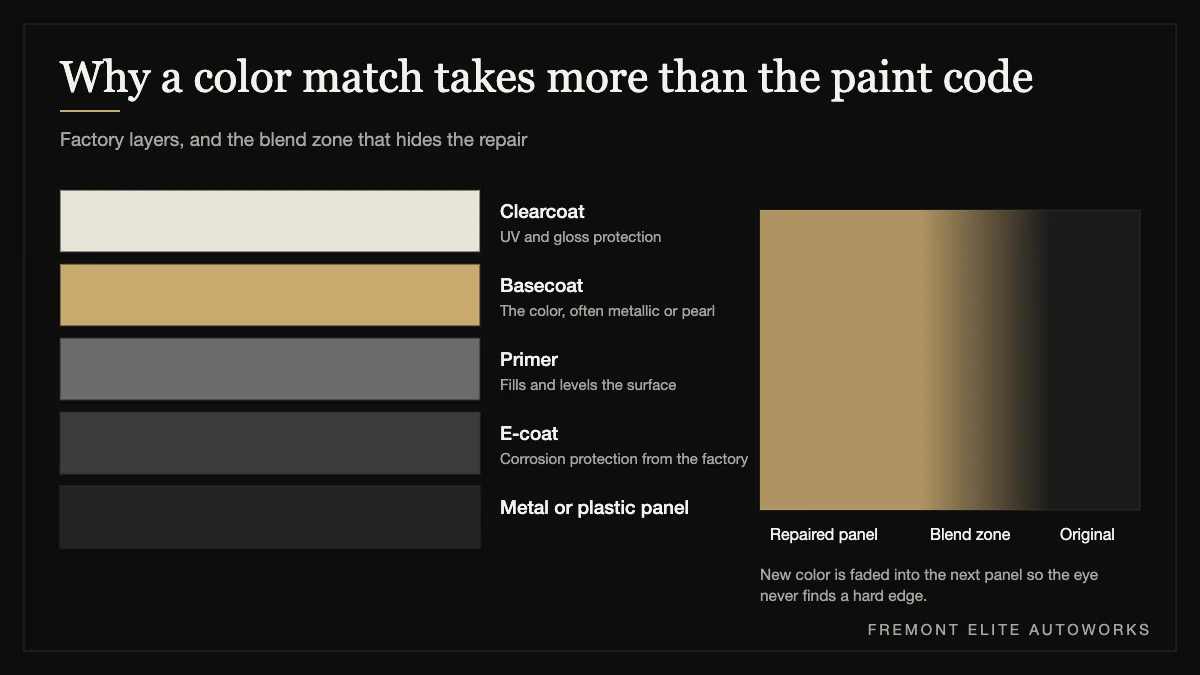
Modern paint is layered: an e-coat for corrosion protection, primer, basecoat for color, and clearcoat for gloss and UV protection. Solid colors are the easiest to match. The harder ones:
- Metallic colors have aluminum flakes in the basecoat. How the flakes land depends on spray pressure, distance and technique, so the same paint can look lighter or darker depending on how it's applied.
- Pearl colors use mica particles that shift color with the viewing angle.
- Tri-coat colors, including many whites and reds on European cars and several EV colors, add a translucent mid-coat between base and clear. Thickness changes the final shade, so they take real skill.
How a proper color match is made
Reading the actual color
We use a spectrophotometer, a handheld scanner that reads your car's paint and helps build a formula for the color as it is now, not just the factory code.
Spray-out cards
Before paint touches the car, the painter sprays test cards and compares them to the car in daylight and under booth lights. The formula gets tinted until the card disappears against the panel.
Blending
This is the step rushed shops skip. Instead of painting only the repaired panel and stopping at its edge, the painter fades the new color into the adjacent panel. Because the eye can't find a hard line, small differences become invisible. That's why estimates often include a line to "blend" a door or fender that wasn't damaged. Our guide to how auto body estimates work explains that line.
A controlled booth
Dust, humidity and temperature all affect how paint lays down and cures. Our spray booth keeps the environment clean and consistent for every coat.
Signs of a bad paint match
- A color shift you can see from ten feet away, especially in direct sun.
- A hard line where the new paint stops at a panel edge.
- Metallic that looks cloudy or blotchy, or a different sparkle than the original.
- Different gloss or texture, often called orange peel, between panels.
- Overspray on trim, rubber seals or glass.
- Clearcoat that peels or dulls within a year or two.
California's claims rules say an insurer's estimate must allow repairs to be made "in accordance with accepted trade standards" (10 CCR 2695.8), and a panel that visibly doesn't match isn't a finished repair. If you see any of these after a repair elsewhere, a refinish can usually fix it. Bring the car in and we'll give you an honest assessment.
European and EV colors take extra care
BMW, Mercedes-Benz and Porsche use many metallic and tri-coat colors, and owners notice small differences. We're certified for all three brands, and paint matching is the part of the job we're known for. Read more in our guide to European car collision repair. Tesla colors can also be tricky, and we cover them in our Tesla collision repair guide.
Protecting the new paint
- Wait before waxing. Give fresh paint time to fully cure before applying wax or a sealant. We'll tell you how long for your job.
- Hand wash for the first weeks. Skip automatic brushes.
- Park in shade when you can, especially through August.
- Consider paint protection film or ceramic coating on the hood and bumper. We offer both.
For everything that happens after a crash, from the tow to the final paint check, start with our complete guide to a car accident in Fremont.
Getting a paint match that disappears in Fremont
- The paint code is a starting point. The match has to fit your car as it looks today.
- Blending the new color into neighboring panels is what makes a repair invisible.
- Metallic, pearl and tri-coat colors need spray-out testing and experienced hands.
Call (510) 634-3433, request a free estimate, or see our paint and color matching service.
Frequently asked questions
Why doesn't my new paint match the rest of my car?
Usually because the paint was mixed only from the factory code without adjusting for your car's faded color, or because it wasn't blended into the neighboring panels.
What does blending mean in auto paint?
Blending means fading the new color into the panel next to the repair so there's no visible edge. It's standard for a good match, especially on metallic colors.
Can a bad paint match be fixed?
Usually, yes. The panel is refinished with a corrected formula and blended into the surrounding panels.
Is tri-coat paint harder to match?
Yes. Tri-coat colors add a translucent mid-coat, and small changes in its thickness change the final shade, so they need test cards and careful application.
How long should I wait to wax a car after painting?
Fresh paint needs time to cure before wax or sealant. Ask your painter for the timing for your specific job.
Sources
- California Code of Regulations. 10 CCR 2695.8, Additional Standards Applicable to Automobile Insurance.
- Weather Spark. Average Summer Weather in Fremont, California.
- California Department of Insurance. Auto Body Repair Consumer Bill of Rights.

Owner-run auto body and collision shop at 41589 Albrae Street, Fremont, open since May 2023. Articles are reviewed by owner Jaz, who spent three and a half years at a dealership with its own body shop before opening the shop. Read our story. Related service: Precision Paint & Color Match.
Keep reading
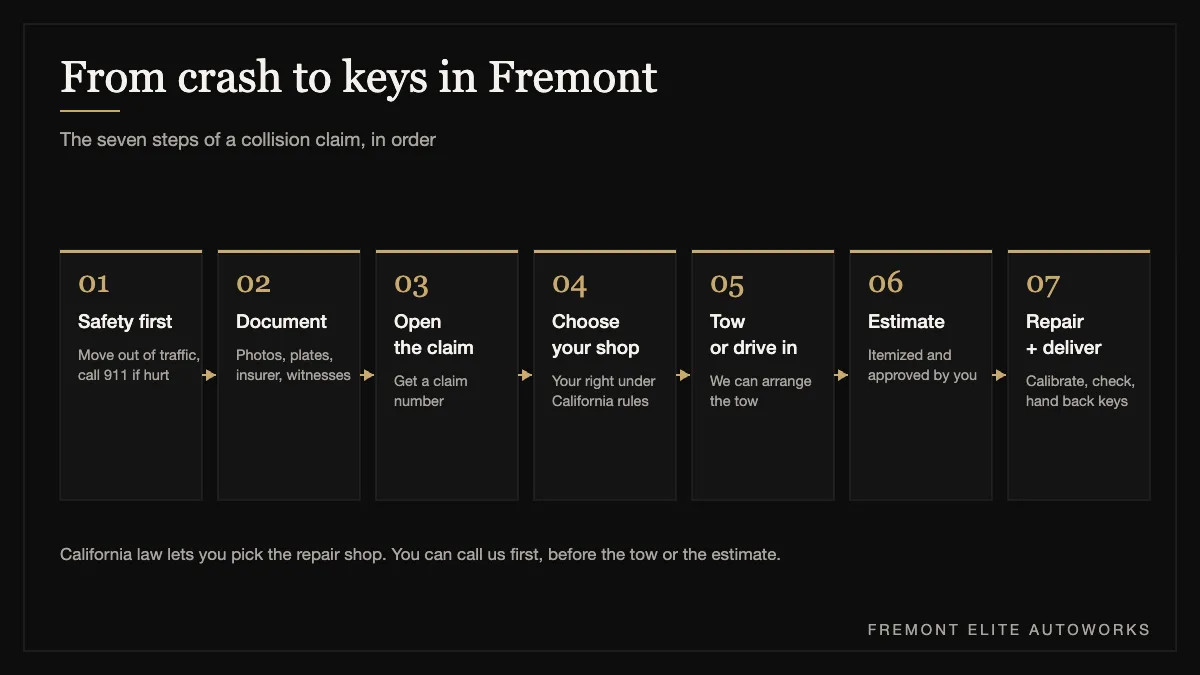 THE FREMONT COLLISION GUIDEWhat to Do After a Car Accident in Fremont: The Complete Repair GuideEvery step from the crash scene to getting your keys back, written by the shop that handles Fremont claims every week.
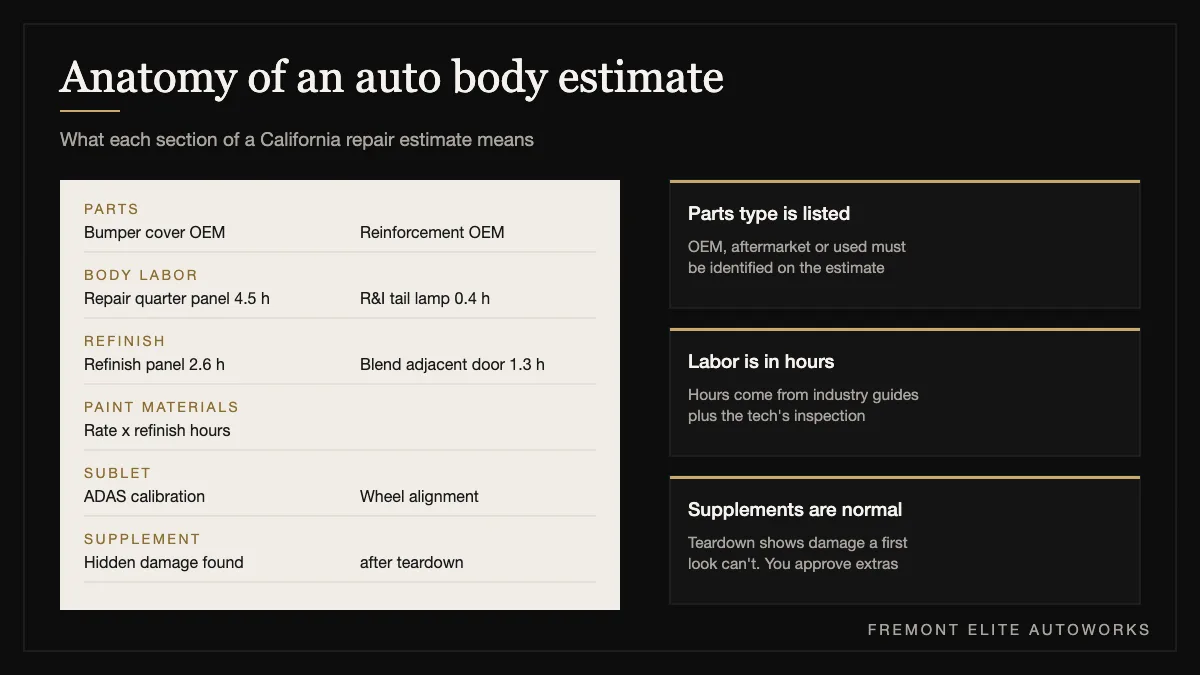 ESTIMATES & PRICINGHow Auto Body Estimates Work in California, Line by LineWhat every line on a collision estimate means, why supplements happen, and the rules that protect you.
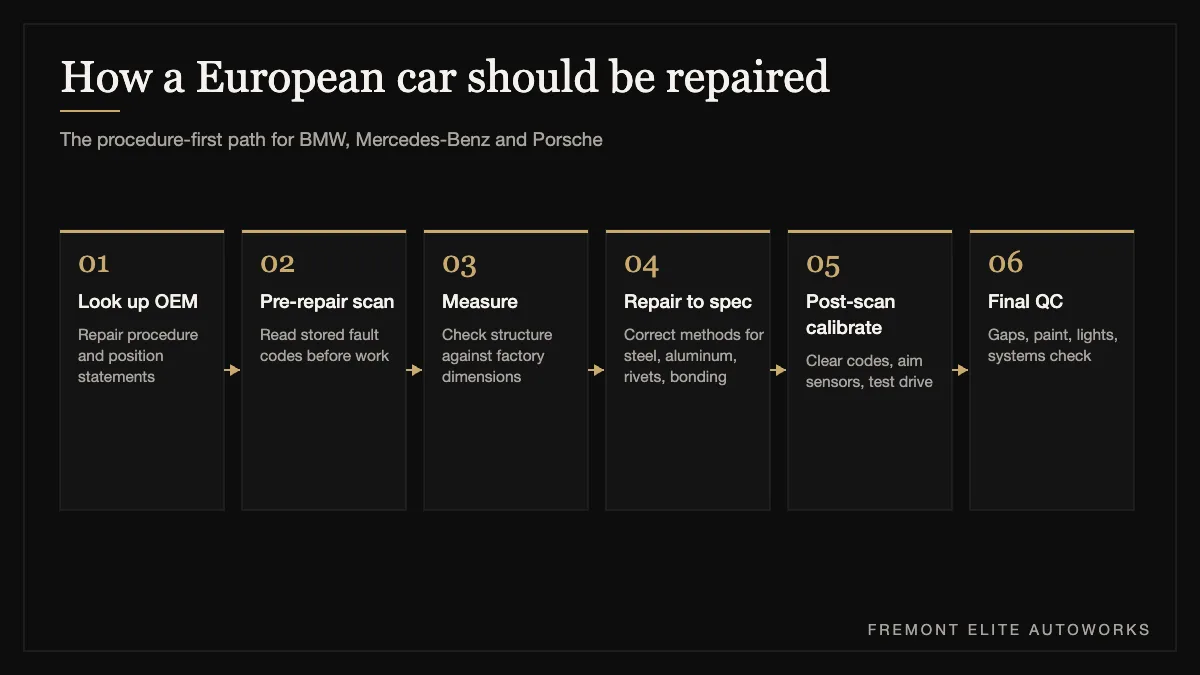 EUROPEAN SPECIALISTSBMW, Mercedes-Benz and Porsche Collision Repair in FremontWhy German cars need procedure-first repairs, and what certification actually means for your car.