KEY TAKEAWAYS
- Low refrigerant means a leak. Recharging without fixing it only buys time.
- Stop-and-go traffic and hot parked cars are when weak A/C systems fail.
- The condenser sits behind the bumper, so front-end crashes often damage it.
- Most newer cars use R-1234yf refrigerant, which isn't interchangeable with R-134a.
- Skip the store-bought recharge cans. Overcharging and sealers can cause damage.
When a car's AC isn't blowing cold, the cause is usually low refrigerant from a leak, a compressor that isn't engaging, a condenser that can't shed heat, or an electrical problem with a fan, sensor or relay. After a front-end collision, a damaged condenser behind the bumper is one of the most common culprits.
Recharging the system without finding the leak is like refilling a tire with a nail in it. It feels fixed for a while, then it's warm again. Here's how the system works, what you can check yourself, and how we diagnose and repair it at our Fremont shop.
How your car's A/C works
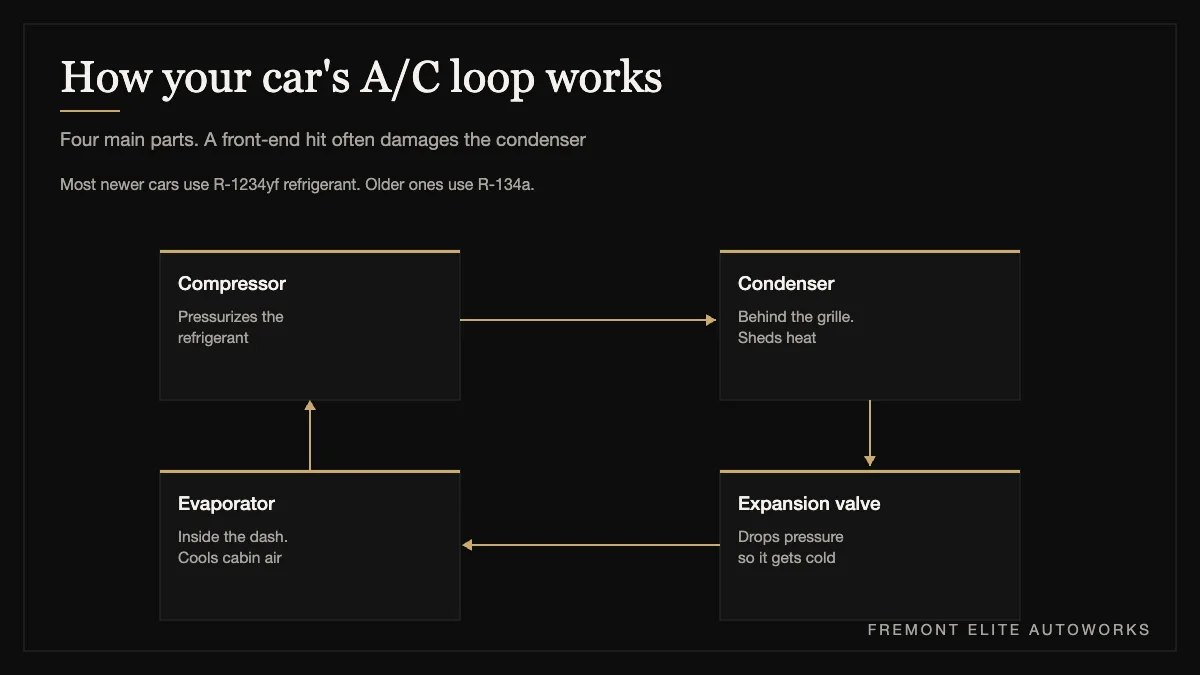
The A/C is a sealed loop:
- Compressor: pressurizes the refrigerant. It's driven by the engine belt on gas cars, or electrically on EVs and many hybrids.
- Condenser: a radiator-like part behind the grille that sheds heat.
- Expansion valve or orifice tube: drops the pressure so the refrigerant gets cold.
- Evaporator: inside the dash, where the blower pushes cabin air across it.
If any part fails, or the loop loses refrigerant, cooling drops.
The most common causes
Low refrigerant from a leak
A/C systems don't use up refrigerant. If it's low, it leaked. Common spots are O-rings at the fittings, the condenser (it's exposed to road debris), hoses and the compressor seal.
Compressor not engaging
If you don't hear a click or see the compressor clutch engage when you turn the A/C on, the cause could be low pressure, a blown fuse or relay, a bad pressure switch, or a failing compressor.
Condenser problems
Road debris and bugs clog it, stones puncture it, and a front-end collision can crush it. A condenser that can't release heat makes the air lukewarm, especially in traffic.
Cooling fans
The fans pull air through the condenser when you're stopped. If they fail, the A/C works on the freeway but goes warm at every red light.
Blend door or controls
If you hear clicking in the dash, or one side blows cold and the other warm, a blend door actuator may have failed.
Why A/C problems show up in Fremont summers
Fremont's summers are dry and warm. Weather Spark's climate data puts average summer highs around 75 to 81 degrees, with August the warmest stretch, and heat waves push well past that. A car parked in the sun at a Fremont business park or an open lot can be far hotter inside than the air outside.
The hardest test for an A/C isn't highway driving. It's stop-and-go traffic, like the crawl on I-880 near Stevenson and Mowry or the afternoon backup onto I-680, where there's less airflow through the condenser and the system has to work harder. That's when a weak fan or a partly clogged condenser shows up.
Front-end collisions and your A/C
This is where body repair and A/C repair meet, and why we do both. The condenser sits directly behind the bumper cover and grille, often with only a plastic absorber in front of it. Even a moderate front hit can bend or puncture it. Sometimes the leak is slow and the A/C works for a few days after the crash, then fades.
After any front-end collision, we check the condenser, lines, fans and brackets as part of the collision repair. If they were damaged in the crash, that's normally part of the insurance claim. Our complete guide to a car accident in Fremont covers the full process, and if you're wondering whether you can pick where the repair happens, read Can I choose my own body shop in California?
R-134a versus R-1234yf
Most cars built in roughly the last decade use a refrigerant called R-1234yf instead of the older R-134a. The EPA lists R-1234yf as an acceptable substitute under its SNAP program because it has a much lower global warming potential, and a 2022 EPA rule in the Federal Register extended that listing and set rules for servicing fittings.
What it means for you:
- The two refrigerants aren't interchangeable. Your car needs the one it was built for.
- R-1234yf costs more per pound, which raises the price of a recharge.
- It needs dedicated service equipment. We recharge with R-134a or R-1234yf to your vehicle's spec.
EVs and hybrids
Many EVs and hybrids use electric compressors and heat pumps, and the A/C system also helps keep the battery at the right temperature. These systems use special compressor oil, and the wrong oil can damage an electric compressor. If you drive a Tesla or another EV, read our guide to Tesla collision repair in Fremont for more on how the systems connect.
What you can check yourself
- Listen for the compressor click when you turn the A/C on with the engine running.
- Look at the condenser through the grille for bent fins, damage or heavy debris.
- Check the cooling fans by letting the car idle with the A/C on. They should run.
- Replace the cabin air filter if airflow is weak. A clogged filter makes the A/C feel weak even when it's cold.
- Look for oily residue at the fittings, which can mean a leak.
Don't add refrigerant from a store can. Overcharging can damage the compressor, and sealer products can contaminate service equipment and the system itself.
How we diagnose and fix it
Before any repair, you get a written estimate, as California's Bureau of Automotive Repair requires.
- Performance test: vent temperature and system pressures.
- Leak detection: UV dye and an electronic leak detector.
- Repair: replace the leaking or failed part, whether that's O-rings, a hose, the condenser or the compressor.
- Evacuate and recharge: pull a vacuum to remove moisture, then charge with the correct refrigerant and oil to factory spec.
- Verify: test vent temperature and pressures again before you pick up.
“For jobs that come in, we do AC, diagnostic and repair and refills.”
JAZ, OWNER
Getting your A/C blowing cold again in Fremont
- If the refrigerant is low, there's a leak. Find it before recharging.
- Front-end collisions often damage the condenser, even when the A/C works at first.
- Newer cars use R-1234yf, which needs its own equipment and costs more per pound.
Call (510) 634-3433, request a free estimate, or see our A/C recharge and repair service.
Frequently asked questions
Why is my car AC blowing warm air?
The most common causes are low refrigerant from a leak, a compressor that isn't engaging, a blocked or damaged condenser, or a failed cooling fan or relay.
How much does it cost to fix car AC in Fremont?
It depends on the cause. A leak repair and recharge costs far less than a compressor or condenser replacement. We diagnose first and quote before any work.
Can a car accident damage the AC?
Yes. The condenser sits behind the front bumper and is often bent or punctured in front-end collisions, sometimes causing a slow leak that shows up days later.
Is an AC recharge enough to fix my car?
Only if the system was properly serviced and isn't leaking. If refrigerant is low, there's a leak that should be found and fixed first.
What refrigerant does my car use?
Most cars built in roughly the last decade use R-1234yf. Older cars use R-134a. Check the label under the hood or ask us.
Sources
- Weather Spark. Average Summer Weather in Fremont, California.
- Federal Register (EPA). Listing of HFO-1234yf Under the SNAP Program for Motor Vehicle Air Conditioning (May 4, 2022).
- California Bureau of Automotive Repair. Guide to Auto Repair.

Owner-run auto body and collision shop at 41589 Albrae Street, Fremont, open since May 2023. Articles are reviewed by owner Jaz, who spent three and a half years at a dealership with its own body shop before opening the shop. Read our story. Related service: A/C Recharge & Repair.
Keep reading
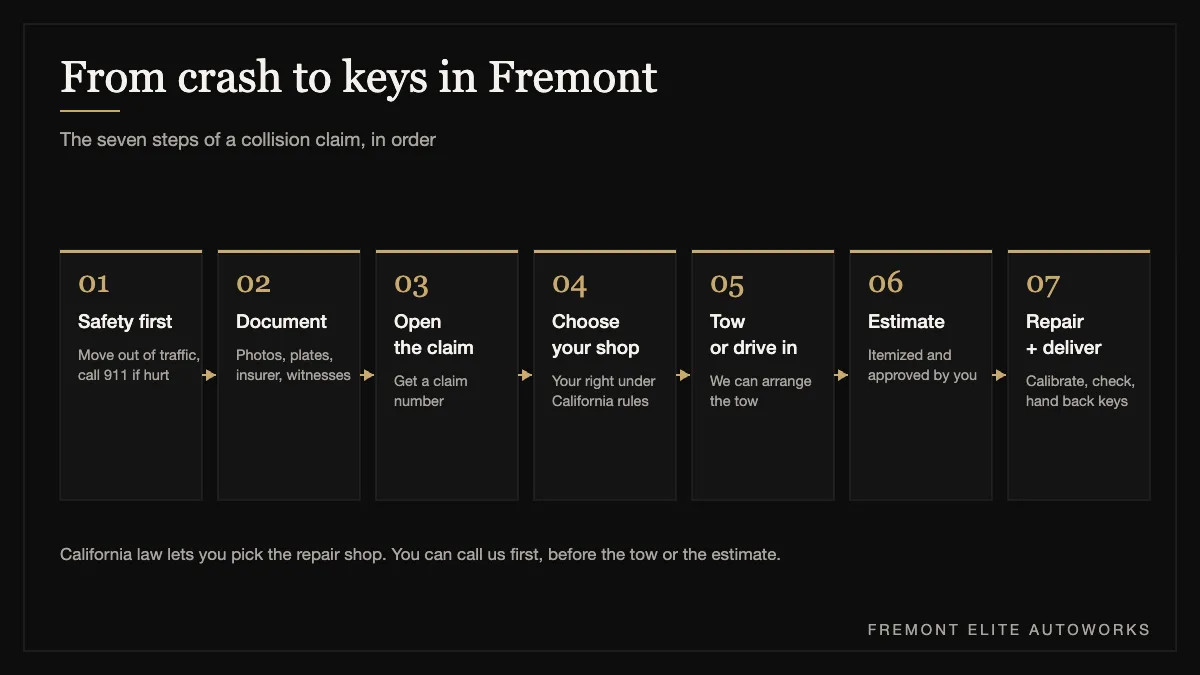 THE FREMONT COLLISION GUIDEWhat to Do After a Car Accident in Fremont: The Complete Repair GuideEvery step from the crash scene to getting your keys back, written by the shop that handles Fremont claims every week.
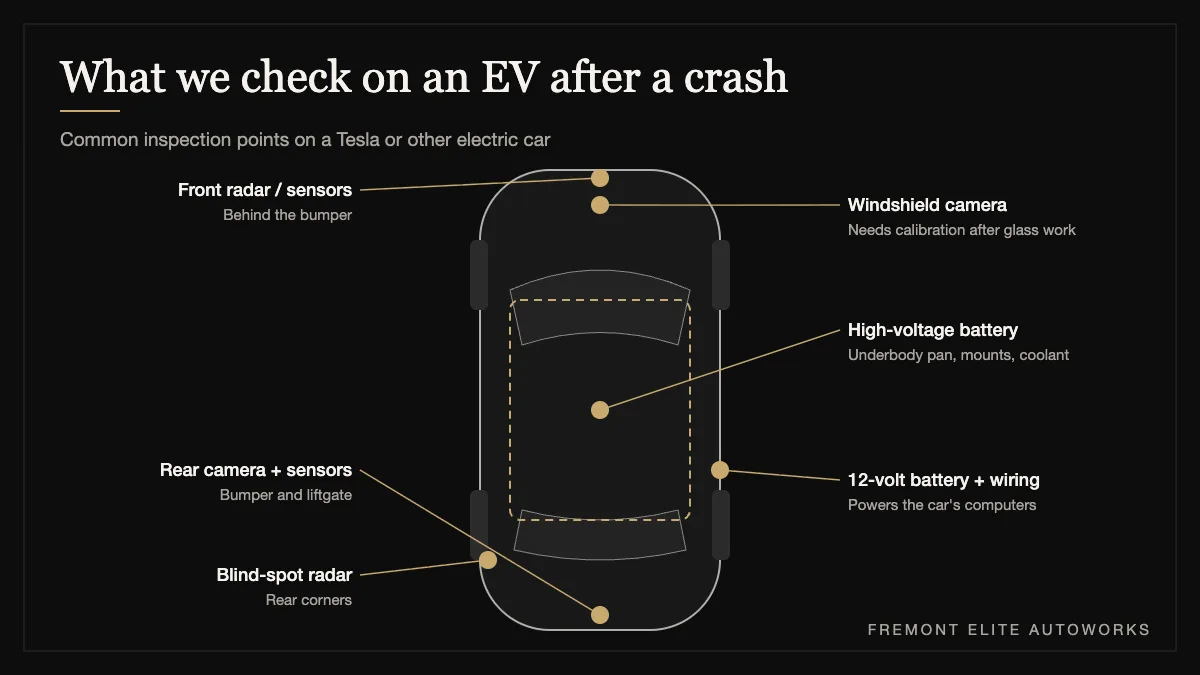 EV & TESLA REPAIRTesla Collision Repair in Fremont: What EV Owners Should KnowHow EV repairs differ from gas cars, and what to ask a shop before your Tesla goes in.
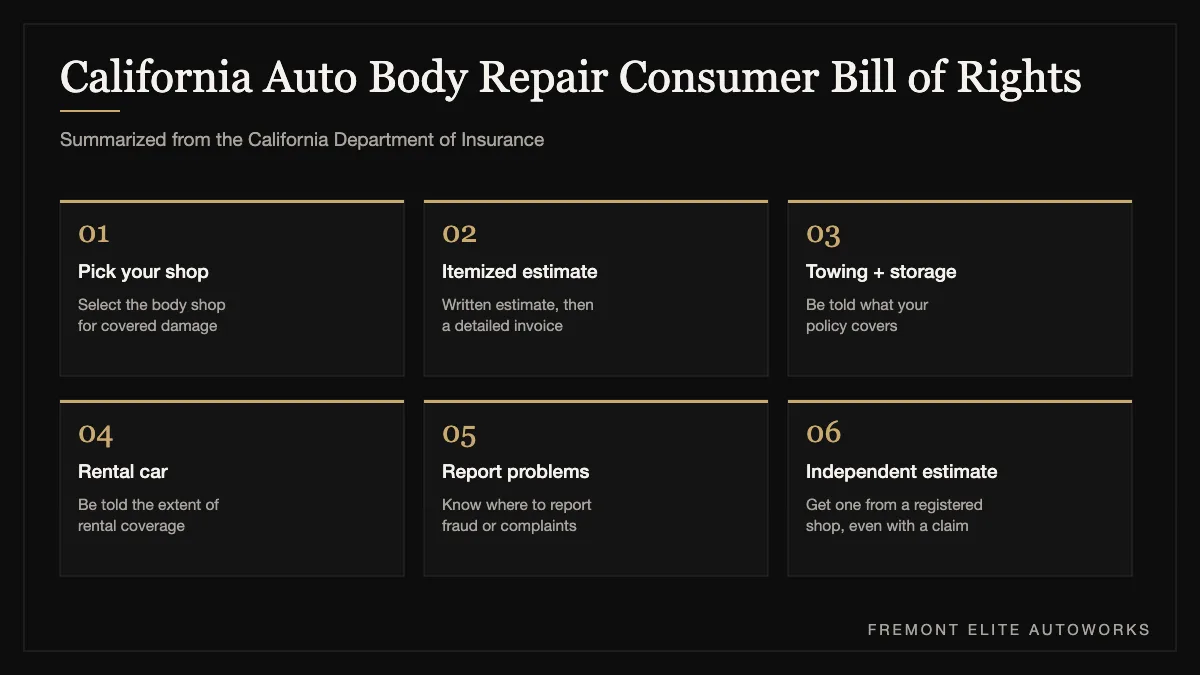 INSURANCE CLAIMSCan I Choose My Own Body Shop in California? Your Rights After a Fremont CrashWhat California law says about picking your repair shop, and the exact words to use with your adjuster.