
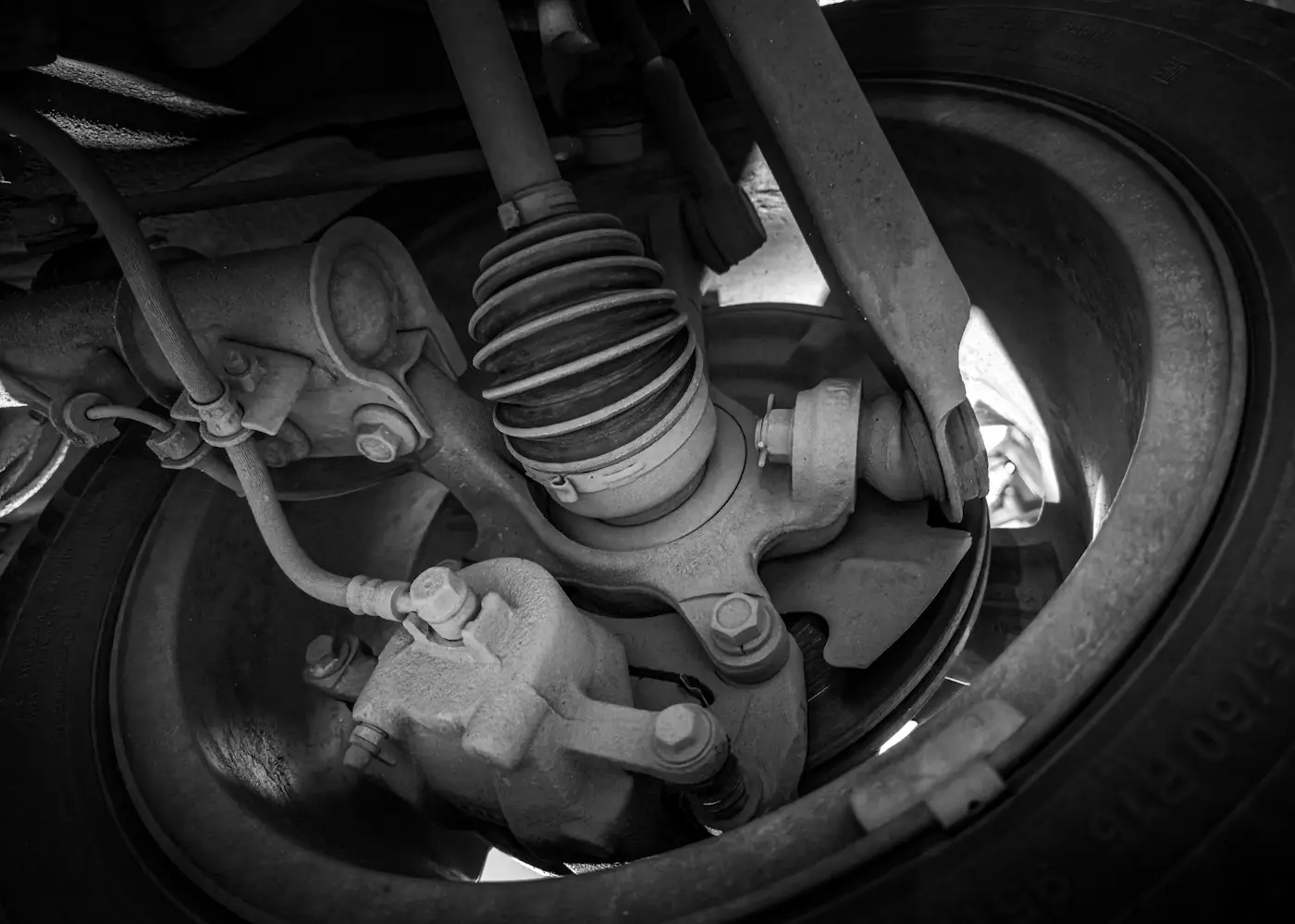
A clunk or knock over a bump, a driveway entrance or a pothole is one of the more unsettling noises a car can make, mostly because it is hard to pin down from the driver's seat. It can sound like it is coming from the front, the back, one side, or nowhere in particular, and the same clunk can mean different things on different vehicles. The good news is that the list of likely causes is short and well understood. Here is what we check, in the order we check it, and why guessing from the sound alone is not reliable, even for an experienced ear.
- A clunk over bumps usually comes from one of four parts: sway bar links, ball joints, control arm bushings or strut mounts.
- The sound alone rarely tells you which part is worn; a lift inspection with the suspension unloaded does.
- Ignoring a clunk does not make it go away, and a failed ball joint in particular is a safety-relevant repair, not a comfort one.
- Speed humps and rough pavement around the port area accelerate wear on exactly these parts.
Sway bar links
Sway bar links connect the stabilizer bar to the suspension on each side, and their job is specifically to control body roll during turns and bumps. The ball-and-socket ends wear and develop play over time, producing a clunk that is often most noticeable over smaller, sharper bumps rather than big dips. These are a relatively inexpensive, common repair and one of the first things we check, since they are among the easiest suspension parts to wear out given how much they move during everyday driving.
Ball joints
Ball joints connect the control arms to the steering knuckle and allow the suspension to pivot. Worn ball joints can produce a clunk over bumps, but unlike a sway bar link, a badly worn ball joint is a genuine safety concern, since it is part of what physically holds the wheel to the car. We check for play by hand on the lift, under controlled conditions, rather than waiting for a dramatic failure, and we explain clearly if a ball joint is approaching a point where it should not wait.
Control arm bushings
The rubber or polyurethane bushings where control arms mount to the frame absorb a lot of the shock from bumps and potholes before it ever reaches the rest of the suspension. Once they crack or compress, the control arm can shift slightly under load, producing a dull clunk rather than a sharp knock. These wear out faster on streets with frequent sharp impacts, which describes a fair amount of West Long Beach's side streets and the areas near the rail crossings, where the repeated jolt of a rough crossing takes a steady toll over months and years.
Strut mounts
The strut mount sits at the top of the strut assembly and includes a bearing that lets the strut rotate with the steering. A worn mount can clunk specifically when turning over a bump at the same time, which is a useful clue when you are trying to describe the noise to us over the phone, since it narrows down the likely cause before the car is even on the lift.
Why we inspect rather than guess
All four of these parts can produce a similar-sounding clunk, and more than one is often worn at the same time on a vehicle that has gone a while without a suspension check. We put the car in the air and physically check each part for play under load, rather than quoting a repair based on the sound description alone, which protects you from paying for a part that was not actually the problem.
This matters more than it might seem, since replacing a sway bar link when the real noise was coming from a ball joint means you have spent money and still have the original clunk. Our process is built specifically to avoid that outcome: we isolate the actual source before recommending anything.
What the repair process actually looks like
Once we have identified the actual worn part, we give you a clear quote for that specific repair, replace it, and road test the vehicle over a few representative bumps before handing it back, confirming the clunk is actually gone rather than just assuming the new part solved it. If more than one part is worn, we quote each separately so you understand exactly what you are paying for and why.
How to describe the noise to us before you come in
A few details help us narrow things down before the car is even on the lift: does the clunk happen on both sides or just one, does it happen while turning or only driving straight, and does it happen over small sharp bumps or bigger dips? None of these answers are required to get an accurate diagnosis once we have the car up on the lift, but they help us have a more informed conversation with you up front, and they sometimes help us figure out roughly how urgent the issue might be before you even arrive.
We would still rather you just say "there's a clunk somewhere and I'm not sure what it is" than skip calling because you cannot describe it precisely. Vague is a perfectly fine starting point; we will get specific on the lift.