
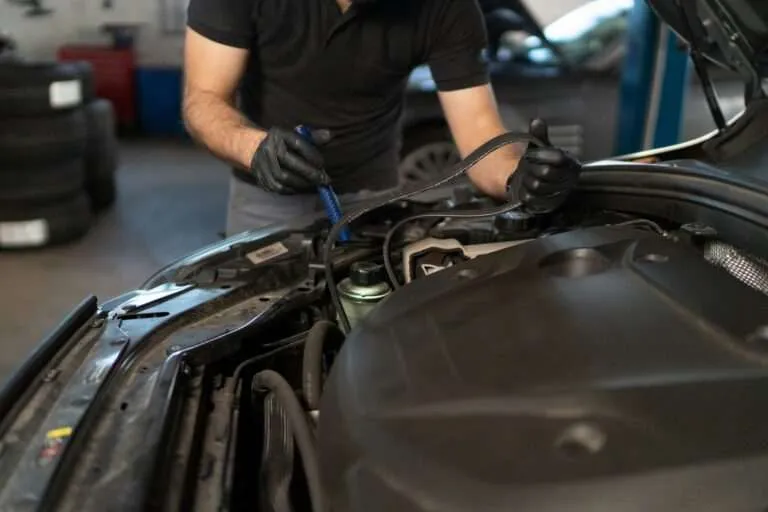
Most modern vehicles use a single serpentine belt that snakes around pulleys to drive the engine's accessories. Older cars and trucks may use several separate V-belts. Either way, the belt turns engine rotation into power for the alternator, air conditioning compressor, power steering pump and, on many engines, the water pump.
This page covers the outside accessory drive belts. The timing belt inside the engine is a different part with a very different job; see our timing belt page for that.
Signs of a worn drive belt
- Squealing or chirping at start-up or when turning the wheel
- Cracks, missing chunks or glazing on the ribbed side of the belt
- A battery light, heavy steering or warm A/C when the belt slips
- Overheating on engines where the belt drives the water pump
- A wobbling pulley or rattling tensioner
What we inspect
We check the belt for cracking, rib wear and glazing, and we inspect the automatic tensioner and idler pulleys, because a worn tensioner will quickly damage a new belt. Pulley bearings are checked for noise and play.
When we replace a belt, we route it to the manufacturer's diagram and confirm proper tension and alignment so it runs quietly and lasts.
Driving in Concord and Contra Costa County
Summer heat in Concord and long A/C run times put extra load on the belt that drives your compressor. A belt check before the hot months is an easy way to avoid losing A/C and charging on the same day.
Questions about belts
How long do serpentine belts last?
Modern belts often last many years, but they wear gradually. We check them at every oil change so you replace one before it fails.
Is a squealing belt dangerous?
It is a warning. The belt or tensioner may be worn or contaminated, and if it breaks you can lose charging, steering assist and cooling.
Published by Anywhere Automotive, Concord, CA. Diagnosis and pricing are confirmed after inspection.